Here's a sentence that sounds like an exaggeration and isn't:
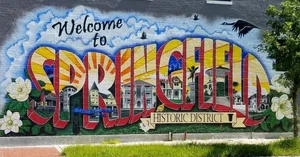
Springfield has its own zoning code.
Not a design guideline. Not a flavor of the citywide rules. An actual dedicated subpart of Jacksonville's Ordinance Code that, in its own words, supersedes Chapter 656 inside the neighborhood's boundary. Springfield has zoning districts — RMD-S, CRO-S, CN-S, CCG-S — that exist nowhere else in the city.
And that's on top of the Certificate of Appropriateness process, which Springfield also has, because it's one of Jacksonville's three locally designated historic districts.
If you read our San Marco guide, you met the opposite pole: a neighborhood that looks protected and has no historic designation at all. Springfield is the other end of the spectrum entirely — three separate layers of rules stacked on the same parcel. You should understand that going in, because it's simultaneously the reason the streetscape survived and the reason your renovation timeline has a calendar attached to it.
Roughly 1,800 contributing historic buildings sit inside 119 city blocks here. That's not a small district with a few nice houses. That's a nearly intact turn-of-the-century American neighborhood, and the rules are the reason.
New to the city? Start with our guide to living in Jacksonville, then come back.
The Three Layers of Rules
Understand these as a stack. They were adopted at different times, they do different things, and they all apply at once.
Layer one: the National Register, 1987
The Springfield Historic District was listed in the National Register in 1987. Roughly 506 acres, 119 city blocks, and 1,784 contributing buildings — which is 95% of everything standing inside the district. Only 98 buildings were counted as non-contributing.
The period of significance runs 1882 to 1930.
As we've said elsewhere in this series: National Register listing by itself is honorary. It doesn't regulate what you do to your house. What it does do here is make properties eligible for certain federal programs — more on that below.
The City's own ordinance calls this "the largest historic residential district in Florida." That's the City's adopted language, so we'll quote it as theirs. What you should not believe is the version that circulates online calling it one of the largest in the country. Nothing supports that.
Layer two: local designation, 1992
Springfield was locally designated by Ordinance 91-733-570 on January 28, 1992. SPAR describes the boundaries as 12th Street north, 1st Street south, Boulevard west, and Clark Street east.
This is the layer with teeth. Local designation means a Certificate of Appropriateness is required before exterior work — and note this carefully, it applies to contributing structures, non-contributing structures, and new construction alike. A 1970s infill house in the district is still in the district.
The City also adopted a Springfield-specific set of preservation guidelines in 1992, separate from the citywide document — with chapters on additions, doors, exterior wood, exterior masonry, foundations and infill, mechanical systems, porches and garages, roofs, fencing and driveways, storefronts and signs, windows, new construction, relocating buildings, and demolition. It's dated, it's still the operative document, and it's worth reading before you make an offer rather than after.
For how the COA process itself works — administrative versus Commission review, timing, the meeting calendar — see our Riverside and Avondale guide and our guide to Jacksonville historic designation, both of which walk through it in detail. The mechanics are the same. What follows is what Springfield has that Riverside doesn't.
Layer three: the Springfield Zoning Overlay, 2000
This is the one almost nobody tells buyers about.
Adopted in 2000 and amended in 2007, the overlay is a bespoke rewrite of the zoning rules inside Springfield's boundary. Some of what it does, in the residential district:
Minimum lot: 25 feet wide, 2,500 square feet. Citywide standards don't permit lots that narrow. Springfield's do, because Springfield was platted that way.
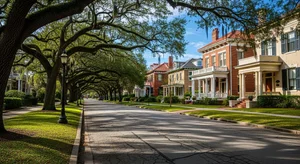
A front setback minimum of 10 feet — and a MAXIMUM of 15 feet. A maximum setback is genuinely unusual, and it is the single reason the streetwall looks the way it does. You cannot build a house set way back from the street here. The code won't let you.
Maximum lot coverage 50%. Maximum height 45 feet.
No minimum off-street parking requirement for most residential uses. Read that again if you've been shopping in the suburbs.
Garages and garage apartments must sit within 50 feet of the rear property line and can never come forward of the front plane of the house.
Accessory apartments are allowed — both interior units and one free-standing garage apartment — with size caps and, in the residential district, an owner-occupancy requirement.
Home occupations get a full page of Springfield-only rules. The ones that actually decide whether your plan works: the operator has to live on site, there's a hard cap on how many people can work there, and the code lists which kinds of businesses are permitted and which aren't. If you're buying with a home business in mind, read that section before you make an offer, not after.
Why this matters to you as a buyer: the overlay is what determines whether you can put an apartment over the garage, run a studio out of the house, subdivide a lot, or build the addition you're picturing. It is not optional and it is not the same as the citywide code you may have looked up.
One boundary trap worth knowing: the local historic district boundary and the zoning overlay boundary are not identical — they differ slightly at the north and south edges. So "am I in Springfield" can have two different answers depending on which rule you're asking about.
Check the specific parcel. The City's Land Development Map has the layers, and the Planning and Development Department will answer directly. We'll tell you who to call. We will not tell you what you can build — that's a zoning determination and it isn't our license.
How Springfield Got Here
It started with a spring in a field
That's apparently the actual origin of the name, per the historian T. Frederick Davis — a spring in a field that West 4th Street now runs through.
The land was originally the Hogans Donation, surveyed in 1824 under a Spanish grant. A trade circular advertised the "Springfield Suburb" in 1871 — 300 acres, four-acre blocks, streets being graded, eight or ten houses under construction. The waterworks finished in 1880, which is what actually made a subdivision out here viable. The Springfield Company incorporated in 1882 and platted the neighborhood that September. The city limits pushed north to 13th Street in 1887, annexing it.
(You'll see "established 1869" on SPAR's materials. The National Register nomination documents 1871 advertising and 1882 platting. If you use 1869, it's SPAR's date, not the record's.)
Two things happened here that you'd never guess
The Florida Sub-Tropical Exposition, 1888–1891. The city raised $100,000 for it. President Grover Cleveland came for Washington's Birthday in 1888. And in 1889, Frederick Douglass visited the Exposition as a guest of what the National Register nomination records as the "colored branch" of the Sub-Tropical Association. The Exposition building was later torn down for a waterworks reservoir — the National Register nomination calls that "the single most regrettable loss to the Springfield area."
Camp Cuba Libre, 1898. The U.S. Army put a Spanish-American War camp here. Roughly 29,000 men in 25 regiments. William Jennings Bryan was stationed in it. There was a typhoid outbreak that July, and the camp closed in January 1899.
The fire went around it
This is the part that explains everything about the housing stock.
On May 3, 1901, the Great Fire burned 146 city blocks of Jacksonville in about eight hours — 2,368 buildings, 9,000 people left homeless.
Springfield didn't burn. Hogans Creek formed a natural firebreak. The fire crossed it at exactly one point just east of Main Street, took a wood yard, and was stopped there. The Market Street Bridge over Hogans Creek was the major escape route out of the burning city — and people ran north across it into Springfield.
Then a lot of them stayed. The burned downtown land was too valuable to rebuild as housing, so the displaced didn't go back. By December 1902 a newspaper reported Springfield leading every suburb in new construction.
673 buildings went up in Springfield between 1900 and 1910. That single decade is most of what you see today. The 1920s boom largely skipped Springfield — not from lack of interest, but because it was already built out, so the boom money went to Riverside, Avondale and San Marco instead.
The last major construction was the Hogans Creek Improvement Project of 1928–29, $500,000 in bonds, with Henry John Klutho as architect.
Klutho, and What He Actually Built
Springfield is where Jacksonville's most famous architect lived, and — unlike some neighborhoods — it's where his verified work actually is.
Klutho came down from New York right after the fire. In 1905 he bought two lots in Springfield for $200; his wife reportedly felt she'd been moved out into the country. In 1909 he built his own house, a Prairie School design owing a clear debt to Frank Lloyd Wright's Ward Willits house, and said to be the first house in Florida to draw on the modernist movements then emerging in America. In 1925 he moved the house from Main Street to 9th Street, where it stands. It's a private residence — admire it from the sidewalk and leave it at that.
The verified Klutho list in Springfield is short and specific:
His own residence, on 9th Street, built 1909 and relocated 1925
Florence Court Apartments, at Main and 8th, 1911 — Prairie, with two vertical stucco piers the nomination compares to Wright's Larkin Building
Klutho Apartments, 2030 Main Street, 1913
Klutho Studios, 22 West 9th Street, 1916 — he built a film studio, because Jacksonville was briefly a movie town
The Hogans Creek balustrades and bridges, 1928–29, which are still there
That's the list. The district contains only six buildings the nomination classifies as pure Prairie, so if someone tells you a Springfield house is "a Klutho," ask for the citation. Klutho's own proposed civic center for the Hogans Creek area was rejected by the city in 1913 — the beginning, per the nomination, of a long frustration with Jacksonville.
One demolished, so you don't go looking: the Klutho-designed house at 1430 Main Street is gone.
What the Houses Actually Are
The National Register nomination counted them, and the numbers tell a truer story than any style label:
1,038 buildings have no discernible stylistic features at all. The majority of Springfield is frame vernacular — typically two stories, gable or hip roof, built well and built plainly.
Bungalow/Craftsman: 74 pure examples, another 88 showing influence
Colonial Revival: 19 pure, plus roughly 167 more showing its characteristics — by the nomination's own counts, the most widespread style here
Queen Anne: 20 pure, with about 105 buildings reflecting it to some degree
Prairie: 6 pure, 37 influenced
Then scattered singles and handfuls — Dutch Colonial Revival, Classical Revival, Mediterranean Revival, Eastlake, Collegiate Gothic, Carpenter Gothic, Mission, one Second Empire, one Georgian Revival, and one Egyptian Revival, which is the Scottish Rite Masonic Temple on Hubbard Street and is genuinely rare in Florida.
Construction: 1,595 of the 1,784 contributing buildings are wood frame; 201 are masonry. 1,294 are two stories.
A few named buildings, all of which you should verify the current condition of before you get excited: the Robert Naughton Ellis House on East 2nd, standing by 1885 and among the earliest left; Solomon Lodge on East First, the district's only Georgian Revival, built for the founder of Barnett Bank; Lampru Court Apartments, 1924, by Henrietta Dozier, one of Florida's first women architects.
The Parks, and Their Names
Three parks run along Hogans Creek, and the naming is genuinely confusing, so here it is straight.
Henry J. Klutho Park — usually just "Klutho Park" — is the one the Springfield Company deeded to the City in 1898, forty acres on condition a park be built. The City finished it in 1901. It has a ball field, tennis courts, a disc golf course, and the library's first StoryWalk. It was originally called Springfield Park, which is where the confusion starts.
Springfield Park — the one that carries the name today — is a different park entirely. Its history:
The City bought the land in 1907 and opened it that August as Dignan Park, named for Peter Dignan, a former chairman of the Board of Public Works. It was the first Jacksonville city park with a supervised playground.
In October 1914 it was renamed Confederate Park, ahead of a monument erected the following year.
On August 11, 2020, the City Council voted to rename it Springfield Park.
On December 27, 2023, the monument was removed.
Those are the dates and the actions. We're stating them because the park's name history is part of the documented record of the place, and describing the park without them would be leaving something out.
Waterworks Park is the third, and the oldest — the Sub-Tropical Exposition site.
Two more places on the neighborhood's edges worth knowing, both documented, both gone: Hansontown, founded after the Civil War and demolished in the late 1960s, and Sugar Hill, lost to I-95 construction and commemorated today by a 96-foot mosaic on the S-Line trail under the interstate overpass.
The Practical Reality
Condition variance is the defining feature of this market
More than anywhere else in this series, the house matters more than the neighborhood here.
At one end: SPAR has run a Tour of Homes for 47 years — that's older than the historic district designation — and the restored houses on it are extraordinary.
At the other end: as of mid-2026, a City Council member's office identified 20 properties in Springfield carrying nearly $20 million in outstanding fines and liens. The Horace Drew Residence, built 1909 on Third Street, sat boarded and deteriorating from 2006 forward and has been on the Jacksonville History Center's most-endangered list since 2012.
That one has a genuinely good update: SPAR acquired the Drew Residence in late 2025 and in September 2026 hired an architecture firm to oversee rehabilitation into a community space with a small-business incubator, backed by a $1.5 million campaign.
What this means when you're shopping: two houses on the same block can be in entirely different universes. Get a contractor into the property during your inspection period, not after. Budget from quotes, not from optimism.
Demolition by neglect — an active policy fight
Jacksonville has a maintenance requirement in its code for landmarks and contributing structures in historic districts. What it doesn't have is a standalone demolition-by-neglect ordinance, and the City's own materials have described that as a gap.
The Historic Preservation Commission convened a task force on demolition by neglect, which adopted a final report with recommendations in 2025. And as of July 2026, a City Council member was drafting legislation aimed at getting city-held historic properties back into productive use — the reported mechanism being that the City could sell foreclosed historic homes at a steep discount by bid to nonprofits or developers, with the buyer required to demonstrate the means to restore and given roughly two to three years to do it, or the property reverts to the City. Springfield was named in the reporting.
As of this writing that bill had not passed. If it matters to your purchase, check its current status — this is moving.
The incentive programs, and the honest version of how they work
Here's a concrete regulatory difference between Springfield and San Marco:
The City of Jacksonville's Historic Preservation Property Tax Exemption is available to owners of locally designated historic properties who complete an approved qualifying improvement project. Springfield properties are inside a locally designated district. San Marco properties, absent individual landmark status, aren't.
What the program actually is, per the City: a ten-year exemption covering the value added by the qualifying rehabilitation — and applying only to the City's portion of the tax bill. Every other taxing authority still assesses the full renovated value, so this is not a break on your whole bill. The work has to meet the Secretary of the Interior's Standards. The application has to be reviewed before work begins. It requires City Council approval.
There's also a federal 20% historic rehabilitation tax credit, and this is the single most misunderstood thing in every Springfield conversation: it applies to income-producing properties only. Owner-occupied houses do not qualify. If you're buying a house to live in, that credit is not for you.
And the City runs a REHAB grant fund, which it describes as being for the repair, rehabilitation and restoration of non-residential income-producing historic buildings that are local landmarks or contributing structures and have been declared critically endangered by the Historic Preservation Commission. Not a homeowner program.
Where our job stops: we can tell you these programs exist and who administers them. We cannot tell you whether a property qualifies, calculate a benefit, or promise you a tax outcome. That's a conversation with your CPA and with the City's Historic Preservation Section — and it should happen before you close, not after you've started work.
Flooding
Hogans Creek runs along Springfield's southern edge, and it floods.
Groundwork Jacksonville, which is running the restoration project with the City, states it plainly: Hogans Creek is the #2 priority in the City's Local Mitigation Strategy, behind only McCoys Creek, and is identified as high risk for flooding and storm surge. Their project materials say the creek "floods Klutho and Springfield Parks, as well as adjacent streets, homes and businesses along much of the creek during even moderate rainfall."
The City's Master Stormwater Management Plan identifies 121 residential and commercial structures within the special flood hazard area there.
The restoration project: a City and Groundwork Jacksonville partnership, at 60% design as of late 2025. Scope includes restoring 1,300 feet of daylighted creek, 24 acres of wetland habitat, pedestrian bridges, and park improvements — with a modeled maximum flood benefit of three feet for the preferred alternative. Community feedback recorded a specific priority of protecting Klutho's balustrades. In June 2026 the Council authorized acquiring 16 parcels along the creek for the work.
How to actually find out about a specific house: FEMA's Flood Map Service Center is the official map. The City's Development Services office handles official determinations and elevation certificates. Then get a real insurance quote on the actual address from a licensed agent, early enough in your inspection period that the answer can change your mind.
We're REALTORS®, not insurance agents or floodplain managers. We won't tell you what zone a house is in or what coverage will cost. Not our license.
Getting around
Springfield sits directly north of downtown, separated from it by Hogans Creek and bounded on the east by I-95. The National Register nomination describes the transition from downtown as "abrupt," which is accurate.
It's a regular grid — named streets running north-south, numbered streets east-west — and most blocks have alleys, which is why the garage rules in the overlay make sense. Two commercial corridors, Main Street and Eighth Street, cross at the heart of the district.
The S-Line Rail Trail already runs through Springfield. It's a 4.8-mile rails-to-trails path on the old Jacksonville Belt Railroad corridor — built 1886, absorbed into the Seaboard Air Line in 1902, abandoned by CSX, and acquired by the City in 2008 — Groundwork Jacksonville calls it the city's first dedicated urban trail. A stretch at the north end remains unfinished and is planned as a future segment. It's also part of the larger Emerald Trail network now under construction across the urban core.
Old houses, and a lot of them
Practically all of this stock is wood frame, two stories, built between roughly 1885 and 1930, on narrow lots, sited close to the sidewalk and close to each other.
The City's own 1992 Springfield guidelines organize rehabilitation into these categories, which is effectively the City telling you where the work is: foundations and infill, mechanical systems, exterior wood, exterior masonry, roofs, windows and shutters, porches and garages, and doors.
The nomination also notes something worth looking for: aluminum, vinyl or asbestos siding has been applied over original siding on many houses here. What's underneath is often intact, and what that means for your project — and your budget — is a question for a contractor and an inspector who work on buildings this old.
We'll flag what we see. Your inspector is the one licensed to tell you what it means.
Look Here If
You want an intact turn-of-the-century neighborhood and you're genuinely energized rather than exhausted by the idea of restoration. You value the rules as protection rather than resenting them as paperwork. You want to be able to walk or bike to downtown and onto a rail trail from your own block. And you're going to buy the specific house on its specific merits, with a contractor's quote in hand, rather than buying the neighborhood and hoping.
This is not a neighborhood for someone who wants to close and move in without a project. Some houses here are fully restored and turnkey. Many are not. Know which one you're looking at.
Neighboring Options
Riverside and Avondale — also locally designated, also COA territory, more Craftsman and Colonial Revival, generally further along in restoration, and no bespoke zoning overlay.
San Marco — across the river, and the regulatory opposite: no historic designation at all, which means no COA and no access to the City's local-designation tax exemption. Different trade entirely.
Building new instead? → Our new construction buyer guide.
SPAR
Springfield Preservation and Revitalization has been at this since 1974 — eighteen years before the neighborhood was locally designated. They're at 1321 North Main Street.
Useful things they actually do for a new owner: they keep the original hard-copy contributing-structure surveys for research by appointment, they run a Design Review Committee of planners, architects and engineers offering free technical help to owners planning exterior work, they host the City's Springfield guidelines, and they run preservation workshops.
Also the Tour of Homes and Gardens each spring, now in its fifth decade, and PorchFest in the fall.
If you buy here, the Design Review Committee is the first call to make. Free technical advice before you file a COA is worth more than most things you'll pay for.
Renting First
A year renting in Springfield will teach you whether you actually want a house of this vintage or just like looking at them — and it costs a great deal less than finding out the other way.
→ See our property management services
Frequently Asked Questions
Is Springfield a historic district? Yes, and at both levels. It was listed in the National Register in 1987 and locally designated by ordinance in January 1992. It's one of Jacksonville's three locally designated historic districts, along with Riverside Avondale and St. Johns Quarter.
Do I need a Certificate of Appropriateness in Springfield? Yes, for exterior work — and it applies to contributing structures, non-contributing structures and new construction alike. Interior work that doesn't change the exterior generally doesn't require one. Verify your specific property with the City's Historic Preservation Section.
What is the Springfield Zoning Overlay? A dedicated subpart of the City's zoning code, adopted in 2000, that supersedes the general zoning chapter inside Springfield's boundary. It creates Springfield-only zoning districts and sets distinct rules for lot size, setbacks — including a maximum front setback — lot coverage, height, parking, accessory apartments, garage apartments and home occupations. It's separate from the historic district designation, and the two boundaries aren't identical.
Can I build a garage apartment in Springfield? The overlay does allow one free-standing garage apartment in connection with owner-occupied single-family property, subject to size limits and placement rules. Whether it's permitted on your specific lot is a zoning question for the City's Planning and Development Department, not something we can answer.
Are there tax incentives for restoring a house in Springfield? The City offers a Historic Preservation Property Tax Exemption for locally designated historic properties completing approved qualifying work — a limited-term partial exemption on added value, applying only to the City's portion of the tax bill, requiring pre-approval before work begins. There's also a federal 20% rehabilitation tax credit, but it applies only to income-producing properties, not owner-occupied homes. Talk to your CPA and the City before you buy or start work. We can't tell you what you'd qualify for.
Does Springfield flood? Hogans Creek along the southern edge is identified by the City as its second-highest mitigation priority, and Groundwork Jacksonville reports it floods the adjacent parks, streets, homes and businesses during even moderate rainfall. The City's stormwater plan identifies 121 structures in the special flood hazard area. A restoration project is in design. Check the specific address against FEMA's flood maps and get a real insurance quote early.
Did Springfield burn in the Great Fire of 1901? No — Hogans Creek acted as a firebreak and the neighborhood was spared. The Market Street Bridge was a main escape route out of the burning city, many of the displaced settled here, and 673 buildings went up in Springfield between 1900 and 1910.
What's the difference between Klutho Park and Springfield Park? They're two different parks. Henry J. Klutho Park was deeded to the City in 1898 and completed in 1901 — and was originally called Springfield Park. The park that carries that name today opened in 1907 as Dignan Park, was renamed Confederate Park in October 1914, and was renamed Springfield Park by City Council in August 2020. The monument there was removed in December 2023.
Come Walk It With Us
Springfield rewards people who do the homework, and punishes people who don't. We'll walk you through which layer of rules applies to a specific address, what the overlay allows on that lot, and who to call at the City before you write an offer — and we'll be honest with you about what a particular house is going to take.
#ForeverFamilyForeverHome
Still mapping the city? → Read our full guide to living in Jacksonville
The Courtney Team | Coldwell Banker Vanguard Realty | Licensed Real Estate Professionals in the State of Florida. Information in this guide is general and educational in nature and is not a representation about any specific property. Descriptions of historic designation, the Springfield Zoning Overlay and other zoning provisions, Certificate of Appropriateness requirements, tax exemption and rehabilitation credit programs, flood history and flood zones, and pending legislation are general explanations that change over time and vary by address — all of them must be independently verified for the specific property and the current year. Nothing here is legal, zoning, tax, or insurance advice; please consult a licensed attorney, CPA, or insurance agent, the City of Jacksonville Planning and Development Department, the City's Historic Preservation Section, and FEMA or City of Jacksonville Development Services as appropriate. Equal Housing Opportunity.