The last three neighborhood guides we wrote were about committees.
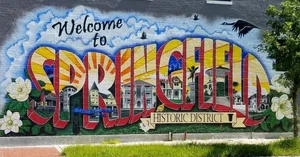
Riverside and Avondale: a design review board decides whether you can replace your windows. Springfield: the same board, plus a zoning code written specifically for that neighborhood. San Marco: no historic designation at all, which turns out to be its own kind of story.
Mandarin is a different conversation entirely.
Out here, nobody is telling you what color to paint the house. What they're also not doing is maintaining your sewer, because you probably don't have one. Or your water main, because you might be on a well. Or your dock, which you own and which four separate agencies have opinions about.
Roughly one in four residential parcels in Mandarin's core ZIP code is on a septic system, and the City has no plan to connect them. Florida law specifically prohibits any government from requiring a septic inspection when a house sells. Which means that on a whole lot of Mandarin transactions, whether anybody ever looks at the system is entirely up to the buyer.
That's the honest frame for this neighborhood. It's also why people love it — big wooded lots, water access, room between houses. The trade is that the infrastructure is yours.
Here's all of it.
New to the city? Start with our guide to living in Jacksonville, then come back.
First, Where Mandarin Actually Is
There's no official boundary. The City of Jacksonville has never adopted one — Mandarin isn't a municipality, isn't a census-designated place, isn't a planning district.
The working definition everybody uses: Sunbeam Road to the north, Julington Creek to the south, I-95 to the east, the St. Johns River to the west. That takes in Loretto, Sunbeam and Arrowhead, and City officials count more than 40 separate homeowner associations inside it.
ZIP codes 32223 and 32257 are the core, with 32258 covering the southern edge. 32256 is not Mandarin — that's Baymeadows and Southside.
The one that costs people real money
Julington Creek Plantation is in St. Johns County. Not Duval. Not Mandarin.
It sits just across Julington Creek, which forms the county line. Different county, different school district, different taxing authority, and a Community Development District assessment on the tax bill that Duval County properties don't carry.
We have watched buyers get to contract believing they were buying in Mandarin. The names are similar and the drive between them is five minutes, but the county line changes the tax bill, the school assignment, and — for many properties there — adds a CDD non-ad valorem assessment that Duval County properties don't carry. If Julington Creek Plantation is on your list, you want our St. Johns County guide instead.
Julington Creek the waterway is in Duval. Julington Creek Plantation the community is not.
How Mandarin Got Its Name (Four Times)
This place has been called four different things.
It was St. Anthony under the British, with a post office by 1765. Then San Antonio during the second Spanish period. After Florida became American territory in 1821, it became Monroe, for the president.
Then on July 29, 1830, at the suggestion of a Vermont-born citrus planter and postmaster named Calvin Read, it was renamed Mandarin — for the mandarin orange.
One documented note on the namesake: Calvin Read was a slaveholder, with people listed under his name in the federal Slave Schedule. We include it because it's part of the record of how this place got its name, and leaving it out would be telling the story incompletely.
Mandarin was incorporated as a town by the Legislature in 1841, though that status lapsed before the Civil War.
The citrus town that stopped being one
Mandarin grew oranges, and shipped them up the river.
Then came the winter of 1894–95. A hard freeze in December, then a blizzard on February 7 followed by three straight nights in the low twenties. Florida's citrus production didn't recover to its pre-freeze level for nearly two decades.
But the freeze alone isn't the whole story, and the version that says it is leaves out the part that actually mattered. The railroads were expanding south, pulling the citrus industry with them and destroying the economic logic of a river-shipping village. Mandarin had roughly 1,200 people in 1881. By the start of World War II it was down to 645.
It stayed a small rural place for decades. What changed it was a bridge — see below.
Harriet Beecher Stowe Wintered Here for Seventeen Years
In 1867, Harriet Beecher Stowe and her husband, Rev. Calvin Stowe, bought 30 acres on the river in Mandarin. She wintered there through 1884 — seventeen seasons — and wrote about Florida in Palmetto Leaves, published in the early 1870s.
Her presence turned Mandarin into a minor tourist destination. Steamboats came down the river so passengers could see the famous author's cottage.
The cottage is gone. It was demolished in 1916, and nothing survives in place. It stood on the river just east of where the Mandarin Community Club is today. Some decorative woodwork fragments are displayed inside the Mandarin Museum, and there's a Florida state historical marker on Mandarin Road.
What's new: a life-size bronze of Stowe by sculptor Brenda Councill was installed at Walter Jones Historical Park in November 2024 — community-funded, on permanent outdoor display. It's worth the stop.
She was also behind a school here. Accounts differ on exactly how it was organized and who it served — some describe a Freedmen's Bureau school for Black children, others an integrated school open to freedmen, women, children and anyone who enrolled. What isn't in dispute: the first building burned, a replacement went up in the early 1870s, and the Mandarin Community Club building at 12447 Mandarin Road is that replacement. It ran as a school until 1929.
(Don't confuse it with the other historic schoolhouse — see the parks section. Different school, different founders, different decade.)
The church, and the window that didn't survive
The Episcopal Church of Our Saviour on Mandarin Road was organized in 1880, and in 1916 it received a Tiffany memorial window dedicated to Harriet and Calvin Stowe together. The subject wasn't religious — it was the oaks of the Stowe place against the river at sunset, essentially the view from her porch. It was funded by admirers around the world and became a destination in its own right.
On September 9, 1964, a hickory tree brought down by Hurricane Dora fell across the church and destroyed the window. The other stained glass survived; that one didn't.
You'll read that the window was "saved" or "salvaged." It wasn't. What exists is a display of recovered fragments at the Mandarin Museum, which is worth seeing precisely because of what it is.
The Maple Leaf
On the morning of April 1, 1864, the Union Army transport steamer Maple Leaf struck a Confederate mine off Mandarin Point and sank. Sixty-eight people were aboard. Four were killed. She was carrying the baggage and camp equipage of three Union regiments.
The wreck sat under about seven feet of mud in twenty feet of water, roughly twelve miles south of downtown, until Dr. Keith Holland and St. Johns Archaeological Expeditions located and excavated it. A ten-day recovery in 1989 brought up more than 3,000 objects.
It was listed on the National Register in October 1994 — and designated a National Historic Landmark the same day. The first NHL in Duval County.
Diving the site is not permitted. But the largest collection of Maple Leaf artifacts on display anywhere in the world is at the Mandarin Museum, on loan from the Florida Division of Historical Resources.
⚠️ A correction worth making, because the error is everywhere including on federal websites: those artifacts are not at MOSH. The Museum of Science & History closed its Southbank location in September 2025 and won't reopen until its new Northbank building is finished. If a guide sends you there for the Maple Leaf, it's out of date.
A second Union transport, the General Hunter, was also sunk off Mandarin Point that same year.
Then a Bridge Changed Everything
Mandarin was unincorporated Duval County, so it had no vote of its own on consolidation — it simply came into the City of Jacksonville when the 1968 consolidation took effect. (Baldwin and the three beach towns were incorporated and could opt out. Mandarin couldn't.)
But the thing that actually made Mandarin a suburb was the Buckman Bridge, which opened in 1970. The City's own materials say development here "greatly accelerated" after it.
That's the pivot. Before 1970, a rural riverside remnant of a citrus town. After 1970, subdivisions.
So What Are the Houses?
Two Mandarins, and the dividing line is roughly that bridge.
The older Mandarin runs along Mandarin Road and the riverfront — a rough six-mile arc off San Jose Boulevard, through the old village core, and back out near Julington Creek. This is where the century-old live oaks are, where the largest lots are, and where you find genuinely old houses mixed in with newer ones built on big parcels. It's also where the septic systems, the private wells, the docks and the protected trees concentrate. Everything in the next section applies most heavily here.
The post-1970 Mandarin is east of San Jose Boulevard and south toward Julington Creek: subdivisions built from the 1970s forward, on platted lots, with homeowner associations. City officials count more than 40 separate HOAs inside the broader Mandarin area. Sewer connection is far more common. The maintenance burden is a normal suburban one.
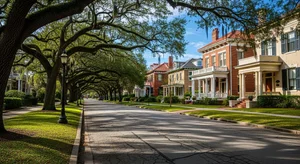
Both have the tree canopy, which is the thing people actually fall in love with out here.
What we're not going to give you is a median year built or an average lot size. We couldn't source either to anything we'd stand behind, and this series doesn't publish numbers it can't cite. What we can tell you is that the two halves of Mandarin behave differently enough that "I want to buy in Mandarin" isn't a narrow enough brief — which, if you read the parent guide, is the same problem Jacksonville has at city scale.
One zoning note that ties the housing to the infrastructure: the Rural Residential-Acre district, which appears out here, permits up to two dwelling units per acre with community water and sewer — but one unit per net acre on well and septic. The large-lot character of old Mandarin isn't an accident or a style choice. It's partly what the infrastructure allows.
The Infrastructure You Own
This is the part of the post that matters most, and it's the part nobody else writes.
Septic
The numbers, from the Florida Department of Health's parcel-level Water Management Inventory, as of the state's 2022 mapping of Duval County — counting parcels the state classifies as known or likely septic:
ZIPSeptic parcelsSewer parcels32223 (core Mandarin)~2,4816,94132257~1,58910,49632258~3,0098,091
That's roughly 26% of classified residential parcels in 32223, and about 7,000 septic parcels across the three ZIPs.
Two honest caveats. "Likely septic" is an inference from permit records, not a field verification. And Duval County as a whole runs about 23% septic — so Mandarin isn't wildly out of line with the county. What's distinctive is where they are: they cluster in the older, larger-lot, riverfront and creekfront sections. This is not a neighborhood-wide condition. It's a street-by-street one.
And here's the part that changes how you shop:
Mandarin has not been in Jacksonville's septic-to-sewer conversion program. That program exists and it's real — where it runs, the installation, the proper septic abandonment and the permits are covered for the homeowner, who then picks up a monthly JEA sewer bill like anyone else on the system. But the priority neighborhoods have been Biltmore C, Beverly Hills, Christobel and Riverview, all on the other side of the county. The prioritization list is reviewed annually, and Mandarin has not appeared on it.
So if you buy a Mandarin house on septic, plan on owning that system. If the program's priorities have shifted by the time you're reading this, JEA will tell you — but don't buy on the assumption that they have.
The statute you need to know about
This is the single most useful fact in this entire post.
Florida law prohibits any government from requiring a septic inspection when a property sells. The language is in § 381.0065(4)(v) of the Florida Statutes:
"An inspection of a system may not be mandated by a governmental entity at the point of sale in a real estate transaction."
The same provision does two other things worth knowing: the existing septic permit transfers with the title, and a property can't be forced up to current permitting standards just because it changed hands.
What this means practically: a septic inspection in a Mandarin transaction is entirely a buyer-elected, buyer-paid due diligence item. Nobody is going to require it. Nobody is going to volunteer it. If you don't ask for it, it doesn't happen.
Ask for it. And pull the permit file while you're at it — it transfers to you either way, so you may as well read it. Responsibility for onsite sewage permitting has been moving between the county health department and the state, so start with the Florida Department of Health in Duval County and let them point you to whoever holds the file now.
(A genuinely strange footnote for a Jacksonville audience: that statute carves out an exception for "a consolidated government" — which is us. The Legislature wrote a Jacksonville-shaped hole in a statewide septic law. We're not going to characterize what that program is or does; ask the City.)
Where our job stops: we will tell you what the law requires, that it requires almost nothing, and that you should hire an inspector. We cannot tell you whether a system is adequate, correctly sized, or has drain field life left. That's an environmental health and engineering call, and no real estate agent is qualified to make it. Anyone who tells you a septic system "looks fine" is guessing.
Wells
About 1,800 residential parcels across the three Mandarin ZIPs are flagged as private well in the same state dataset.
We're giving you a count and not a percentage on purpose. The state's "unknown" category on drinking water is large — utilities report sewer connections more completely than water connections — so a percentage would overstate the precision.
The myth worth breaking: septic does not mean well. Far more Mandarin homes are on septic (about 7,000) than on a private well (about 1,800). Most Mandarin septic homes are on JEA public water. People assume the two go together out here and they usually don't.
If you are buying a well property:
Permitting is split. The City's Environmental Quality Division permits wells under six inches in diameter; the St. Johns River Water Management District handles six inches and larger. Permits are required for construction, repair, modification and abandonment.
Duval County has delineated areas where known groundwater contamination or designated vulnerability triggers additional well construction requirements. Whether a specific parcel is in one is a City determination — ask them, don't guess.
Florida does not require routine testing of private wells. The Department of Health recommends annual testing for coliform bacteria and nitrates, and lead every three years. That's a recommendation, not a rule.
And the same limit applies as with septic: we can tell you to test it. We can't tell you the water is safe.
Docks
The general picture — mean high water line, state ownership of submerged lands, the separate regulatory and submerged-lands authorizations, FDEP, the Army Corps, the water management district — is covered in the waterfront section of our Jacksonville guide. All of it applies here.
Three things are specific to Mandarin:
One — you are not in an aquatic preserve. Duval County's aquatic preserve covers the salt marsh at the northern end of the county, near the river's mouth. Mandarin sits well upstream of it. Buyers tend to treat "the St. Johns River" as one regulatory regime; it isn't. A Mandarin dock doesn't carry the heightened aquatic preserve standard.
Two — the manatee protection zones here are written around docks. Mandarin's entire shoreline sits in a year-round slow speed zone. The buffer isn't a fixed distance: it's defined as the greater of 500 feet from shore, or 200 feet from a dock that extends more than 300 feet.
Read that again. There is a state manatee rule whose boundary moves depending on how far your neighbor's dock sticks out. Which tells you something real about the shelf on this part of the river — docks out here get long, because they have to.
Going up into the creek, the rules change again. There's a separate 300-foot shoreline buffer on Julington Creek and its associated waterways east of the San Jose Boulevard bridge centerline — which is exactly the water a Mandarin creekfront buyer cares about — plus a slow speed zone within 450 feet either side of that bridge. Further up Julington and Durbin, stricter shore-to-shore zones apply.
Manatee zones change. Check FWC's current maps rather than an old PDF, and check them for the specific stretch of water in front of the property.
Three — the creeks are their own question. Julington and Durbin Creek shoal up considerably faster than the main river. How long a dock needs to be to reach usable water is a property-specific engineering question, and we're not going to publish a depth figure we can't source. Get NOAA chart 11492 and a marine contractor.
If there's an existing dock, pull the permit file. If there isn't and you want one, that conversation happens inside your inspection period with a marine contractor — not after closing, and not on the assumption that because the neighbor has one you can have one. We don't tell clients a dock is permitted, permittable, grandfathered or compliant; agents get themselves in trouble doing exactly that.
San Jose Boulevard: The One You Don't Own
Everything above is infrastructure you control. This is the piece you don't.
San Jose Boulevard is State Road 13, and FDOT maintains it — not the City. That's genuinely useful to know: potholes, signals and striping are an FDOT District 2 issue, not a MyJax call. Most people get this wrong.
(It is also not US 1. US 1 is Philips Highway.)
FDOT's 2025 traffic counts for the Duval stretch:
SegmentAverage daily trafficSt. Johns County line → Loretto Rd46,000Loretto Rd → I-295 on-ramp53,500I-295 → Sunbeam Rd45,000North of Sunbeam Rd51,000
That Loretto-to-I-295 segment is the busiest, and it's the one most Mandarin residents use daily.
Drive it before you commit to an address off it. At the hour you'd actually be driving it. We say this in every one of these guides and we mean it most here.
The commute, and the mistake everybody makes
The Buckman Bridge does not go downtown. It carries I-295 west, across the river to Orange Park and Clay County. If you tell a Mandarin resident you're taking the Buckman to work downtown, they'll know you don't live here yet.
Downtown from Mandarin is San Jose Boulevard north. I-295 gets you east to the Southside, Baymeadows and I-95.
One genuinely useful corrective: Mandarin has a reputation as a long commute, and census travel-time data for the area doesn't really support it — it lands close to the Jacksonville metro average. That won't be true of your commute, which depends entirely on where you work and when you leave. Drive it.
What is true: when the Buckman is restricted, there's no local workaround. Your alternates are the Fuller Warren roughly 21 miles north or the Shands roughly 18 miles south.
No Historic District — But Read This Carefully
Mandarin is not a historic district at any level. No National Register district. No local designation. No Certificate of Appropriateness requirement on district grounds — unlike Riverside Avondale, St. Johns Quarter and Springfield, which are Jacksonville's three local districts.
One caveat worth knowing: a COA requirement can also attach to an individually designated Local Landmark, anywhere in the city, district or no district. So the clean answer is "no district," not "no possibility." Verify the specific address with the City's Historic Preservation Section.
There are exactly two individual National Register listings in Mandarin: the Mandarin Store and Post Office (1911) and the Maple Leaf. National Register listing is honorary and doesn't regulate what you do to a building — the distinction is covered in our guide to Jacksonville historic designation.
But there's a separate thing that people confuse with historic designation, and it has teeth:
Parts of Mandarin Road are a designated scenic and historic corridor under a City ordinance adopted in 2001 — reported as Jacksonville's first. Under it, a live oak six inches in diameter or larger within 20 feet of the street right-of-way is a protected tree, and removal is prohibited.
A corridor is not a historic district. It does not create design review over your house. It does not require a COA. What it does is protect the trees — and on Mandarin Road, where the live oaks are at least a century old, that's the whole point.
This is a live issue right now. A proposed JTA sidewalk project along 2.3 miles of Mandarin Road has drawn hundreds of residents to public meetings and a petition with hundreds of signatures, specifically over impacts to those protected oaks. The project has been working through design, with final design expected in 2027. If you're buying on or near Mandarin Road, ask where it stands — this one moves.
If you want a tidy illustration of what this neighborhood is about: the residents are fighting a sidewalk to save the trees. That's Mandarin.
Verify any specific parcel on the City's Land Development Map before you plan a driveway widening or any clearing near the right-of-way.
Parks — and Two Names That Changed
If you're reading older guides, two of these are listed under names they no longer have.
Walter Jones Historical Park, 11964 Mandarin Road. The City bought ten acres from the Jones family descendants in 1994 — Jacksonville's first historical park — and it opened in 2000. It holds the Mandarin Museum, the Stowe bronze, and the 1898 St. Joseph's Mission Schoolhouse for African American Children, relocated here in 2015 and the last remaining one-room schoolhouse in Duval County.
Tommy Hazouri Sr. Park, 14780 Mandarin Road — formerly Mandarin Park, renamed in 2022. This is Mandarin's principal public boat ramp, on Julington Creek where it meets the St. Johns, rated for any size vessel. A paddleboard rental kiosk went in in 2024 and a new playground in 2025.
Richard H. "Dick" Kravitz Regional Park, 10931 Hood Road South — formerly Losco Regional Park, renamed in March 2025. 210 acres, assembled in 1998 with a state land grant. New front parking opened in 2024.
Julington-Durbin Preserve — 2,042 acres, and it's in Duval County, co-managed by the water management district and the City. It protects about nine miles of shoreline along Julington and Durbin creeks, and manatees come into both seasonally. Public access is off Bartram Park Boulevard — not off Mandarin Road.
Flooding
Parts of Mandarin flood. Specific parts.
Hurricane Irma in September 2017 produced the worst flooding in Jacksonville's recorded history, and local reporting documented floodwaters through Old Mandarin, with Julington Creek in major flood. Residents reported water in homes and submerged docks. Hurricane Milton in October 2024 brought a surge forecast along the St. Johns and localized flooding off the Julington tributaries. Flash flooding from ordinary heavy rain is separately documented.
Where: the low-lying riverfront and creekfront — Old Mandarin along the St. Johns, and the Julington Creek shoreline. The interior subdivisions east of San Jose Boulevard are a different risk picture entirely.
Don't generalize in either direction. "Mandarin floods" and "Mandarin doesn't flood" are both wrong.
Check the specific address at FEMA's Flood Map Service Center. For an official determination and an elevation certificate on riverfront or creekfront property, the City's Development Services office is who handles that. Then get a real insurance quote on the actual address from a licensed agent, early in your inspection period.
We're REALTORS®, not insurance agents or floodplain managers. We won't tell you what zone a house is in or what coverage costs. Not our license.
What to Have Inspected Out Here
Beyond a standard home inspection, this neighborhood adds items:
Septic — tank condition, drain field age and remaining life, last pump-out, and the permit file from Duval Environmental Health
Well — construction permit history, whether the parcel is in a City-delineated area, water testing, pump and pressure tank age
Dock and seawall — the permit file, pilings, decking, lift, and whether the dock's length interacts with the manatee buffer
Trees — on Mandarin Road, what the corridor ordinance protects, before you plan anything near the right-of-way
Flood — elevation certificate and a FIRM determination by address
Every one of those is "hire the right specialist." We'll tell you which specialist and flag what we notice. None of it is an agent's call to make.
Look Here If
You want a large wooded lot, mature oaks, and real space between houses. You want water access — the river, a creek, or a boat ramp five minutes away. You'd rather have land than architecture, and you're not looking for a house you can only modify with a committee's permission.
And — this is the part that decides it — you're comfortable owning your own infrastructure. The septic, the well, the dock, the trees. Knowing what you have, budgeting to maintain it, and hiring the right people to look at it before you buy rather than after.
Lean older Mandarin, along Mandarin Road and the riverfront, for the largest lots, the oldest trees, the water, and the highest likelihood of septic, well and dock questions.
Lean the post-1970 subdivisions east of San Jose Boulevard for sewer connection, smaller maintenance burden, HOA structure, and a simpler transaction.
Neighboring Options
San Marco — north along the river, older housing, no historic designation either, and a completely different set of due diligence questions.
St. Johns County — immediately south across Julington Creek. Different county, different school district, and CDD assessments on many newer communities. This is where Julington Creek Plantation actually is.
Riverside and Avondale — the opposite trade: small lots, historic architecture, and design review.
Building new? → Our new construction buyer guide.
Renting First
If you've never owned a septic system or a dock, renting a year in Mandarin is a cheap education.
→ See our property management services
Frequently Asked Questions
Is Mandarin a historic district? No — not at the local level and not on the National Register. There's no Certificate of Appropriateness requirement on district grounds, unlike Riverside Avondale, St. Johns Quarter and Springfield. There are two individual National Register listings in Mandarin: the Mandarin Store and Post Office, and the Maple Leaf shipwreck. Separately, parts of Mandarin Road are a designated scenic and historic corridor that protects qualifying live oaks near the right-of-way — that's a tree protection, not design review.
How many Mandarin homes are on septic? Per the Florida Department of Health's parcel inventory as of the state's 2022 Duval County mapping, roughly 26% of classified residential parcels in the 32223 ZIP are known or likely septic — about 2,500 parcels, and around 7,000 across the three Mandarin ZIPs. They cluster in the older, larger-lot riverfront and creekfront sections rather than spreading evenly.
Will the City connect my Mandarin septic home to sewer? Jacksonville has a septic-to-sewer conversion program, but its priority neighborhoods are elsewhere in the county and Mandarin has not been on the list. If you buy on septic here, plan to own that system.
Is a septic inspection required when a house sells in Florida? No. Florida law expressly prohibits a governmental entity from mandating a point-of-sale septic inspection. It's a buyer-elected, buyer-paid due diligence item — and the existing permit transfers with the title. We'd strongly encourage getting one; nobody is going to require it.
Does septic mean the house is on a well too? Usually not, here. Far more Mandarin homes are on septic than on private wells, and most Mandarin septic properties are on JEA public water. Check both independently.
Is Julington Creek Plantation in Mandarin? No. It's in St. Johns County, across the creek that forms the county line — different county, different school district, different taxing authority, and a CDD assessment on many properties. Julington Creek the waterway is in Duval. Julington Creek Plantation the community isn't.
Does Mandarin flood? Parts of it do. The low-lying riverfront in Old Mandarin and the Julington Creek shoreline saw significant flooding in Hurricane Irma in 2017, and localized flooding in later storms. The interior subdivisions east of San Jose Boulevard are a different picture. Check the specific address against FEMA's maps and get an insurance quote early.
Do Mandarin residents take the Buckman Bridge downtown? No — that's the most common mistake newcomers make. The Buckman carries I-295 west to Orange Park and Clay County. Downtown from Mandarin is San Jose Boulevard north.
Let's Go Look
We'll tell you which questions to ask about the specific house — where the drain field is, whether there's a well, what the dock permit file says, which trees you can't touch. And we'll tell you who to call, because on most of it we're not the right person to give you the answer.
#ForeverFamilyForeverHome
Still mapping the city? → Read our full guide to living in Jacksonville
The Courtney Team | Coldwell Banker Vanguard Realty | Licensed Real Estate Professionals in the State of Florida. Information in this guide is general and educational in nature and is not a representation about any specific property. Descriptions of onsite sewage treatment and disposal systems, private wells, dock and submerged lands permitting, manatee protection zones, tree protection ordinances, historic designation, flood history and flood zones, roadway maintenance and traffic data, and utility programs are general explanations that change over time and vary by address — all of them must be independently verified for the specific property and the current year. Nothing here is legal, engineering, environmental, tax, or insurance advice; please consult a licensed attorney, inspector, marine contractor, or insurance agent, the Florida Department of Health in Duval County, the City of Jacksonville, the St. Johns River Water Management District, the Florida Department of Environmental Protection, and FEMA as appropriate. Equal Housing Opportunity.